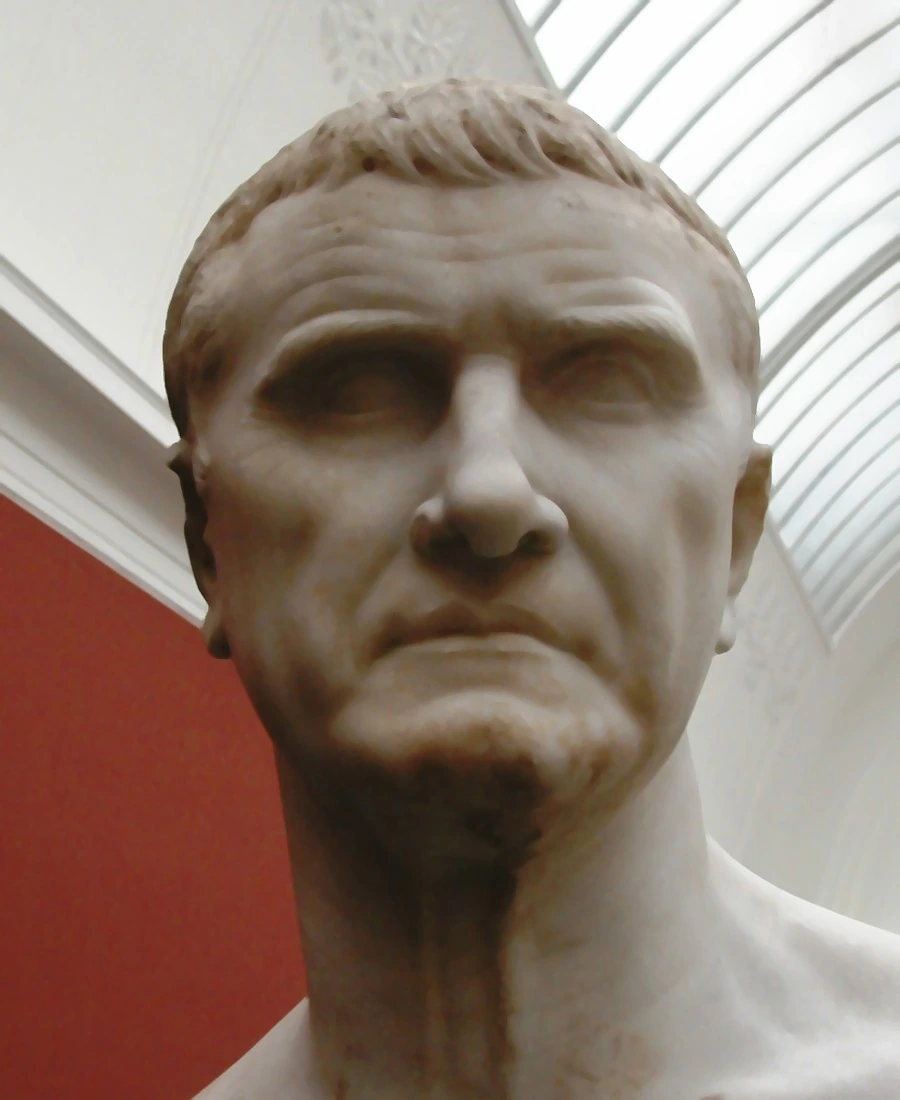
The most defensible modern estimate for Marcus Crassus's net worth, converted into today's money, falls somewhere between $2 billion and $20 billion depending on the conversion method you use. Some analysts push that figure even higher, into the $170 billion range, when using purchasing-power comparisons. No single number is definitively correct, and anyone presenting one without caveats is glossing over serious methodological problems. What we can say with confidence is that Crassus was almost certainly the wealthiest private individual in the Roman Republic, and his fortune in modern terms was firmly in "billionaire" territory by any reasonable calculation.
Marcus Crassus Net Worth Today: Best Estimate in 2026

Daniel Rothstein
2 May 2026
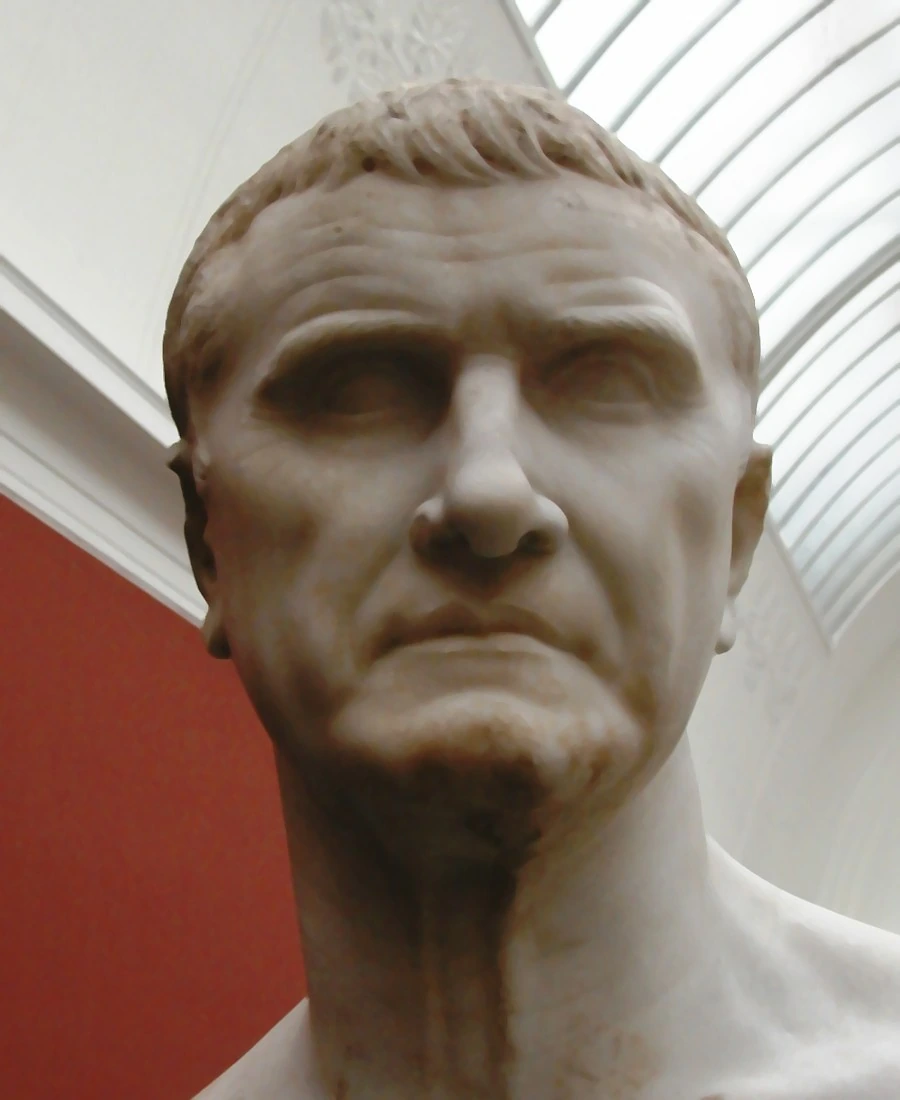
Who Marcus Crassus actually was

Marcus Licinius Crassus (c. 115–53 BCE) was a Roman senator, general, and the financial architect behind much of late Republican Rome's political machinery. He's best known as one-third of the First Triumvirate alongside Julius Caesar and Pompey the Great. Plutarch described him as Rome's supreme fixer: the person who quietly financed careers, bought loyalty, and pulled strings while others grabbed the military glory. He died at the Battle of Carrhae in 53 BCE after a disastrous campaign against Parthia.
It's worth quickly clearing up a naming confusion that comes up on this site. "Marcus Crassus" is almost always shorthand for Marcus Licinius Crassus, the triumvir. There was also a Lucius Licinius Crassus (a different prominent Roman) and the broader Licinius Crassus family network, which Wikipedia explicitly flags as a source of confusion.
If you landed here after searching for a modern Marcus and net worth figures, you may have been looking for someone like Marcus Veltri (a contemporary YouTube-adjacent personality) or Marcus Aurelius (the philosopher-emperor, whose wealth profile is a separate topic entirely). If you're actually interested in Marcus Veltri net worth, it helps to verify which modern source is making the claim and how it estimates income and assets.
You may also be looking for Marcus Aurelius net worth, but his wealth profile as a philosopher-emperor is handled separately. This article is specifically about the Roman Republic-era financier and general.
Why you can't get a true "today" net worth for Crassus
Here's the honest limitation: Crassus has been dead for over 2,000 years. There's no estate, no publicly filed tax return, no Forbes profile. The ancient sources we rely on, primarily Plutarch's Life of Crassus, Pliny's Natural History, and Appian's Civil Wars, give us wealth figures expressed in sesterces and talents. Converting those into 2026 U.S. dollars requires a chain of assumptions, and every link in that chain introduces uncertainty. So when a website says "Marcus Crassus net worth today: $X billion," what they really mean is "our best conversion of ancient wealth records using modern equivalence methods." That's a useful exercise, but it's not the same as knowing his actual current net worth, which is, of course, zero.
The same problem applies to other historical wealth figures this site touches on, including Marcus Aurelius, whose Stoic philosophy didn't stop him from controlling the wealth of an entire empire. Historical net worth estimates are interpretive reconstructions, not balance-sheet readings.
How historians and economists calculate net worth for historical figures
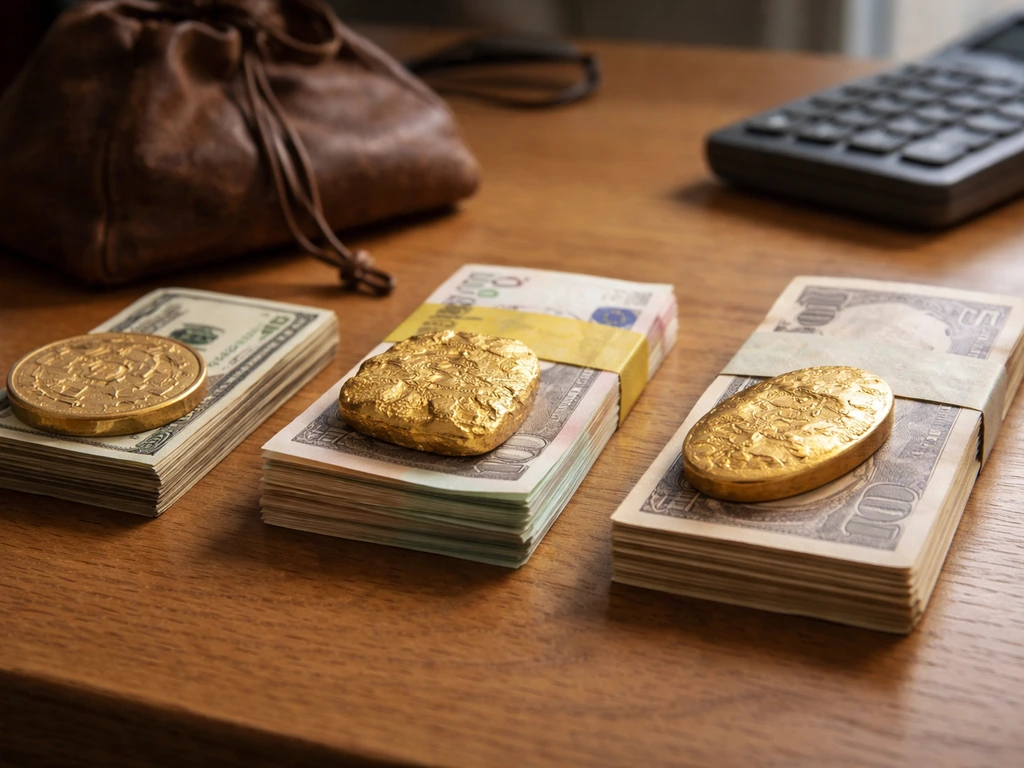
There are three main approaches researchers use to convert ancient wealth into modern equivalents, and each produces a different number. Understanding them helps you read any estimate more critically.
- Commodity price equivalence: Convert the ancient currency into a modern currency using the price of a fixed commodity like gold or silver. For example, a sestertius contained a known amount of silver, so you can calculate how much silver Crassus's 200 million sesterces would represent and then price that silver at today's spot price. This method tends to produce lower estimates.
- Wage or labor equivalence: Ask how many days of unskilled labor the wealth could buy in Roman times, then multiply that by today's equivalent daily wage. This typically produces much larger modern figures because ancient wages were tiny relative to modern ones.
- Income or return-on-wealth approach: Economist Branko Milanovic, cited in The Washington Post, applied a 6% annual interest rate to Crassus's 200 million sesterces fortune to estimate his annual income, then compared that income to modern benchmarks. This is useful for relative comparisons but still depends on the accuracy of the underlying wealth figure.
- GDP-share approach: Estimate what fraction of Rome's total economic output Crassus controlled, then apply that same fraction to today's global or U.S. GDP. This method produces the highest estimates and is the one that generates figures like $170 billion or more.
None of these methods is objectively correct. They answer different questions: How much silver did he own? How much labor could he command? How dominant was he economically? Depending on which question matters to you, the right method changes.
The best available estimate: what Crassus was worth in today's money
The two anchor figures from antiquity are Plutarch's claim that Crassus's private inventory was worth 7,100 talents (up from a starting point of 300 talents), and Pliny's statement in Natural History that his landed property alone was worth 200 million sesterces, calling him the richest Roman citizen after Sulla. A Harvard-compiled dataset on ancient inequality records the same 200 million sesterces figure. Scholars have noted that 7,100 talents converts to roughly 42,600,000 denarii, and since four sesterces equaled one denarius, these two figures are broadly in the same ballpark, though not identical.
| Conversion Method | Estimated Modern Equivalent | Confidence Level | Key Assumption |
|---|---|---|---|
| Silver commodity value | $2–4 billion | Low-Medium | Silver price at ~$1 per sestertius silver content |
| Wage/labor equivalence | $10–20 billion | Medium | Roman daily wage vs. modern equivalent |
| Income/return approach (Milanovic) | $~2 billion annual income | Medium | 6% return on 200M sesterces |
| GDP-share approach | $100–170 billion+ | Low | Rome's GDP as fraction of today's global output |
For a practical summary: most serious analysts land between $2 billion and $20 billion when using commodity or wage-based methods. The GDP-share figures above $100 billion are intellectually interesting but almost certainly overstate the case, because they assume Rome's economic scale is comparable to the modern global economy in ways that don't hold up under scrutiny.
My working estimate for Crassus's net worth in today's money is approximately $10–15 billion, using a wage-equivalence approach as the most intuitive proxy for real-world economic power. Treat that as a reasonable midpoint, not a precise figure. If you are looking for Marcus Licinius Crassus net worth figures, this article explains how those modern dollar estimates are derived from ancient inventories and property values.
Where Crassus's wealth actually came from

Understanding the sources of his wealth matters because it affects how we interpret any conversion. His fortune wasn't a pile of gold coins sitting in a vault. It was a diversified portfolio of income-generating assets, and Plutarch is our most detailed source on the breakdown.
- Real estate: Crassus famously exploited Rome's chronic fire risk. When buildings burned (and Rome burned frequently), he would send his team of slave architects and builders to the scene, buy the charred land and adjacent properties from panicked owners at distressed prices, then rebuild and rent or sell. Pliny anchors his landed property value at 200 million sesterces.
- Silver mines: He owned productive silver mines, which provided ongoing commodity income rather than a one-time asset sale.
- Slaves: Plutarch emphasizes that Crassus's slave holdings were among his most valuable assets. He specifically owned skilled slaves, including readers, secretaries, silversmiths, and estate managers, who generated income through their labor and could be hired out.
- Political financing: Crassus lent money to Roman senators and politicians, often without interest, creating networks of obligation rather than pure financial return. Yale University Press describes him as Rome's "secret financier" and the man who held the "puppet strings of power."
- Military spoils: After being assigned command against Spartacus's slave revolt (an appointment Appian links directly to his wealth and birth), Crassus profited from the campaign's aftermath.
- Tax-farming connections: The publicani system, where private contractors collected taxes on behalf of Rome, was a major wealth engine for elite Romans. While Crassus's direct involvement in tax contracts is less explicitly documented than his real estate dealings, the institutional framework he operated within made such connections standard.
The key takeaway is that Crassus's wealth was productive, not static. It generated returns continuously, which is why the income-based conversion methods (like Milanovic's 6% return approach) capture something real about his economic position, even if the resulting dollar figures are imprecise.
A note on the reliability of the ancient numbers themselves
Before you take any modern conversion at face value, it's worth knowing that the ancient figures themselves are contested. Scholarly PDFs analyzing Roman public and private revenues flag the 200 million sesterces figure as "potentially dubious" and not straightforwardly verifiable. Plutarch wrote about Crassus roughly 150 years after his death, drawing on earlier sources that no longer exist in full.
The sestertius's value and silver content shifted over time, and as Britannica notes, the denarius (four of which equaled one sestertius) fluctuated in weight and purity across periods. The Guardian, discussing historical wealth comparisons, specifically cites the conversion of Pliny's 200 million sesterces into modern money as a disputed calculation. The honest position is that the input numbers carry uncertainty, and that uncertainty multiplies when you run them through any conversion formula.
How to read net worth claims about historical figures responsibly
Whether you're reading about Crassus or any other historical figure with a modern "net worth" estimate, here's a practical checklist for evaluating those claims.
- Check what method was used. Did the source use commodity value, wage equivalence, income return, or GDP share? Each gives a different answer. A source that doesn't specify is being sloppy.
- Look at the base figure. Is the estimate starting from Plutarch's 7,100 talents, Pliny's 200 million sesterces, or some other number? Understanding the anchor matters.
- Watch for precision theater. A claim like "$11.97 billion" is false precision for a figure this uncertain. Any credible estimate should be a range, not a single number.
- Ask whether the source is primary or secondary. Plutarch and Pliny are as close to primary as we have. Modern sites that cite "ancient historians" without specifying which ones are often laundering imprecise claims.
- Consider the purpose of the comparison. GDP-share comparisons are useful for showing relative economic dominance. Commodity comparisons are better for literal asset value. Income comparisons work best for lifestyle and spending power. Choose the method that matches your question.
- Apply the same skepticism to modern celebrity net worth figures. Even for living people, net worth estimates from sites like this one are reconstructions from public data: known salaries, reported real estate transactions, equity stakes, and business valuations. The methodology is more transparent, but it's still an estimate.
Marcus Licinius Crassus is an extreme case because the data is ancient and fragmentary, but the principles apply broadly. If you've been exploring net worth profiles across this site, including figures like Marcus Prinz von Anhalt or more contemporary personalities, you'll notice that the credibility of any estimate scales with how clearly the source breaks down its methodology. If you're looking up Marcus Prinz von Anhalt net worth, treat any number the same way: verify the methodology and the reliability of the underlying sources. The same standard applies here, and by that standard, the honest Crassus answer is a range of $2 billion to $20 billion, with $10–15 billion as a working midpoint, labeled explicitly as an estimate built on contested ancient figures and a chosen conversion method.
FAQ
If Marcus Crassus has a “net worth today” number, why isn’t it treated like normal personal finance estimates?
Because his wealth is reconstructed from ancient, non-audited descriptions (for example, inventories and property valuations) rather than ledgers, bank balances, or an estate filing. “Net worth today” is therefore a currency-conversion exercise, not a current, measurable asset snapshot.
Why do some articles claim Crassus was worth $170 billion or more, while others stay in the single-digit billions?
They usually switch the underlying equivalence method. GDP-share or broad economic-scale proxies can inflate results by assuming Rome’s overall economy maps directly to modern global output, while commodity, silver, or wage-equivalence approaches anchor to narrower drivers like labor value or specific asset types.
Which source numbers matter most for these estimates, and what are the main vulnerabilities?
Two anchors often repeated are an inventory-style “talents” figure and a “sesterces” land-value figure. Their vulnerabilities include potential transcription issues, author bias, the time gap between Crassus and later writers, and the fact that coin-metal and monetary values changed across periods.
Does it matter whether Crassus held gold coins versus land, and how does that affect “net worth today”?
Yes. Methods that treat wealth as income-producing (wage or return-based proxies) respond differently than methods that treat it as a store of commodity value. Since the sources describe him as owning productive property and having economic reach, income-based methods often track “power” better than pure metal-based conversions.
If the ancient figures are contested, should I trust any midpoint like $10–15 billion?
You can use a midpoint as a practical heuristic, but only if the article clearly states the chosen equivalence logic and shows how it relates to the input anchors. Without that transparency, a single midpoint can hide which assumptions are driving the estimate.
How should I interpret the phrase “potentially dubious” about the 200 million sesterces figure?
It typically means the valuation may not be straightforwardly verifiable, or it could reflect literary or secondary reporting rather than a recoverable accounting record. In these reconstructions, weak input numbers usually lead to wider uncertainty bands.
What’s the biggest mistake people make when comparing historical wealth estimates across different websites?
They compare the final dollar figure while ignoring the method used to get there. Two numbers that look close might be derived from incompatible anchors (wage vs GDP-share vs commodity), and two numbers that look far apart might be similar in method but different in the reliability of the underlying ancient inputs.
Can I convert the ancient figures myself to get a “more accurate” modern number?
You can try, but you still must choose a conversion framework, decide how to handle coinage changes, and pick whether you’re measuring purchasing power, labor value, or economic dominance. Self-calculation does not remove subjectivity, it just makes your assumptions explicit.
Does “net worth” for Crassus include political influence, patronage, or control of markets?
Not directly. Most conversions only attempt to translate stated asset values into modern equivalents. Political leverage and “fixer” activity can affect economic outcomes, but unless a method explicitly models returns from influence, it will not be fully captured in a simple net-worth-to-dollars conversion.
If I’m searching for the wrong person, how can I tell whether a “Marcus Crassus” claim is about the Roman triumvir or someone modern?
Check the time period and identifiers. The Roman figure is Marcus Licinius Crassus (late Republic, died in 53 BCE). If a claim ties “Crassus” to modern media, business, or streaming content, it’s likely a different individual and the net-worth logic is completely different.
Next Article
Marcus Licinius Crassus Net Worth: USD and GBP Estimate
Estimated Marcus Licinius Crassus net worth in USD and GBP, explaining limits of measuring Roman wealth and conversion m