
SEO Title: Marcus Armstrong Net Worth 2026: What the IndyCar Driver Is Likely Worth Meta Description: Marcus Armstrong's estimated net worth in 2026 sits between USD 0. Example primary source: INDYCAR.com team announcement (use as template for team press release sourcing) notes that Primary evidentiary sources to assemble a transparent net‑worth profile (examples and where to obtain them): 1) team press releases/driver announcements (e.g., INDYCAR.com release on Armstrong); 2) series/organiser prize‑fund press releases (e.g., Formula 3 €1M fund); 3) race result PDFs and FIA event documents (for race win listings and any published prize statements); 4) driver CV / official website / social copy (Marcus’s site) for sponsorship mentions; 5) corporate registry records for any company directorship/ownership; 6) licensed image databases for sponsor verification; 7) reputable journalism that quotes contracts or agent comments (Autosport/Motorsport/NBC). Use these exact document classes as primary pulls when building line‑by‑line financial claims. 8M and USD 3.5M, here's how that range was built and what drives his earnings.
Marcus Armstrong Net Worth 2026: Estimated Wealth Breakdown

As of July 2026, Marcus Armstrong's net worth is best estimated at somewhere between USD 0.8 million and USD 3.5 million. That is a wide range, and it is wide for a reason: driver contracts in IndyCar are almost never disclosed publicly, sponsorship deals are rarely confirmed by value, and no corporate filings or asset registers have surfaced that put hard numbers on his finances. What this profile does is take every verifiable data point available, his career results, the published salary benchmarks from publicly discussed IndyCar contracts, known junior-series seat costs, and sponsor visibility, and builds a transparent, reasoned estimate from them. If you want a single headline number, take the midpoint at roughly USD 2 million. But reading the reasoning behind the range will tell you far more about where Armstrong actually stands financially.
Who is Marcus Armstrong and what does this profile cover
Marcus Armstrong is a New Zealand single-seater racing driver, born 21 February 2000 in Christchurch. He came through the Ferrari Driver Academy, competed in Formula 3 and Formula 2 under the FDA umbrella, and made the transition to IndyCar with Chip Ganassi Racing before moving to Meyer Shank Racing for the 2025 season. At 26 years old in 2026 he is still an ascending driver, not a superstar earner, which is exactly the situation that makes an honest net-worth estimate challenging and, frankly, interesting. This profile is built for fans and curious readers who want to understand not just a number but how that number is constructed, what is solid evidence, what is informed inference, and where the genuine uncertainty sits. It is not a gossip piece; it is as close to a transparent financial reconstruction as public sources allow.
Quick facts
| Field | Detail |
|---|---|
| Full name | Marcus John Armstrong |
| Profession | Professional racing driver (IndyCar Series) |
| Nationality | New Zealand |
| Date of birth | 21 February 2000 |
| Age (as of July 2026) | 26 |
| Estimated net worth range | USD 0.8 million – USD 3.5 million |
| Estimate as-of date | 25 July 2026 |
| Primary income sources | IndyCar contracted salary, sponsorship/endorsements, possible family business support, performance bonuses |
| Confidence level | Low-to-moderate (no public contract or asset disclosures found) |
The best-effort estimate and why the range is so wide
The USD 0.8M – USD 3.5M range was built using four inputs: the likely salary band for a mid-grid IndyCar driver without a top-three team budget, the absence of any disclosed multi-million sponsorship deal, Armstrong's documented career length and results, and published industry benchmarks for what drivers at his level typically earn and spend. It is an inference, not an accounting. No team press release from Meyer Shank Racing, Chip Ganassi Racing, or any prior employer has ever disclosed Armstrong's base salary or bonus structure. No sponsorship brand has issued a press release naming him as a paid ambassador with a stated fee. Because of those gaps, the range has to be scenario-based: the lower end (USD 0.8M) reflects a conservative scenario where junior-career seat costs, travel, management fees, and taxes have absorbed most of gross earnings; the upper end (USD 3.5M) reflects a more optimistic scenario where family backing reduced his cost burden materially, sponsorship income is moderately strong, and accumulated savings from several full IndyCar seasons are intact.
Algorithmic celebrity-net-worth aggregator sites publish figures for Marcus Armstrong that range from implausibly high to vaguely low, with no sourcing methodology visible. Those figures were treated as background noise here, not as evidence. The only figures treated as anchors are: confirmed published salary context (Pato O'Ward's publicly discussed package, used as a ceiling for non-superstar scaling), documented junior-series seat-cost reporting from RACER and similar outlets, and FIA/series prize-fund announcements where prize money is explicitly stated.
How the estimate was calculated: methodology and citation pointers
The methodology used here follows a four-step process. First, sum documented or strongly implied cash receipts across known employment years: IndyCar salary estimates scaled from published comparator contracts, junior-series prize winnings where results and prize-fund structures are on record, and any disclosed business income. Second, add a conservative sponsorship and endorsement estimate using social media footprint, sponsor logo visibility in published race photos (available from Getty/Motorsport Images), and the absence of any explicit brand-ambassador announcement. Third, add or subtract family capital support as a possible but unverified factor, the Armstrong Motor Group is a publicly documented New Zealand automotive dealership group associated with the Armstrong family, but no Companies Office filing or press release has been found that links Marcus Armstrong personally to equity in that business. That item is flagged as unverified. Fourth, apply uncertainty bands of plus 30-50 percent on the optimistic side (for undisclosed sponsorships, bonuses, or family equity) and minus 30-50 percent on the conservative side (for taxes at relevant rates, management/agent fees typically running 15-20 percent of gross, and driver costs that may not have been fully covered by teams in junior years). The primary source classes anyone attempting a more precise calculation should pull are: team announcement press releases on INDYCAR.com, FIA event classification PDFs for prize-qualifying results, series prize-fund announcements (such as the Formula 3 EUR 1 million prize fund announced for 2025), Armstrong's official site and social profiles for sponsorship mentions, and New Zealand Companies Office records for any directorship or shareholding.
Where the money comes from: income source breakdown
Race salary and contracted team compensation
This is almost certainly Armstrong's largest single income line in 2025 and 2026. IndyCar salaries are not publicly disclosed as a matter of routine. The best public anchor available is the reporting around Pato O'Ward's package, which drew significant attention precisely because it was unusually large and unusually public. For a mid-grid driver at a team like Meyer Shank Racing, a competitive but not top-three budget operation, industry observers and journalists who cover IndyCar finances place realistic salary ranges for drivers in Armstrong's position at roughly USD 500,000 to USD 1.5 million per year, depending on sponsorship brought to the team, seniority, and results clauses. This estimate is marked as moderate-confidence inference. No team disclosure or leaked contract exists to confirm a specific number.
Sponsorships and endorsements
Armstrong carries personal sponsorship logos on his helmet and race gear that are visible in licensed race photography, but no brand has issued a press release naming him as a paid personal ambassador with a disclosed fee. His social media following, while active, is not at the scale that typically commands six- or seven-figure personal endorsement packages in motorsport. A conservative estimate places personal sponsorship income at USD 50,000 to USD 200,000 per year at his current career stage. This is a low-confidence estimate, it could be zero if all sponsor relationships are team-level rather than personal, or it could be higher if private deals exist that have not been publicly announced.
Team support and contracted perks
In many IndyCar arrangements, the team covers logistics, travel, equipment, and technical costs directly, meaning these do not pass through the driver's personal income but also do not appear as personal wealth. During Armstrong's junior career under the Ferrari Driver Academy, FDA would have covered or subsidized a substantial portion of racing costs that would otherwise run USD 1.5 to USD 2 million per F2 season (a published benchmark from RACER and similar outlets). That subsidy was a career benefit but not cash income Armstrong could bank personally. Confidence on this line: moderate, based on published FDA program reporting.
Prize money and performance bonuses
Armstrong won races in Formula 3 and Formula 2. Junior series prize funds vary: the FIA Formula 3 announced a formal EUR 1 million prize fund for the top five drivers from 2025 onward, and F2 has historically had structured prize payments for championship finishers. FIA event classification PDFs and series announcement documents are the correct source to determine exact amounts in the seasons Armstrong competed. IndyCar has bonus structures for race wins and championship positions, but the amounts are not routinely published. This income line is real but modest relative to salary, estimated at USD 20,000 to USD 150,000 across his junior-to-IndyCar career in total, not per year. Confidence: low-to-moderate.
Appearance fees and ancillary income
At his current career stage, appearance fees from non-race events, media days, and promotional work exist but are unlikely to be a material income line. Driver appearance fees at this level typically run in the USD 1,000 to USD 10,000 range per event. Confidence: low. This item contributes minimally to the overall estimate.
Investments and business interests
No corporate filings, press releases, or credible journalism have been found that link Marcus Armstrong to equity in any company, property ownership, or investment portfolio. The Armstrong Motor Group is a documented New Zealand automotive dealership business associated with his family, but no public record establishes that Marcus himself holds shares or a directorship. See Armstrong's (Armstrong Motor Group), official news / dealership group site for company announcements Armstrong's (Armstrong Motor Group) — official news / dealership group site. This entire line is marked as unverified. If family equity or inheritance is in play, it could shift the net-worth estimate materially upward, but it would be speculative to include a number here without evidence.
Confidence summary by income source
| Income source | Estimated annual range (USD) | Confidence level |
|---|---|---|
| IndyCar contracted salary | 500,000 – 1,500,000 | Moderate (inferred from public comparators) |
| Personal sponsorships/endorsements | 50,000 – 200,000 | Low (no public disclosure found) |
| Race prize money and bonuses | Varies; modest annually | Low-to-moderate (series PDFs needed) |
| Appearance fees and media work | Minimal (under 50,000) | Low |
| Business/investment income | Unknown / unverified | Unverified — no public record found |
Career timeline: the moves and results that shaped his earnings
- 2018 – Entered the Ferrari Driver Academy (FDA). Competed in Formula Regional European Championship. FDA coverage of racing costs reduces out-of-pocket burden on the Armstrong family significantly.
- 2019 – Promoted to FIA Formula 3 Championship with Trident Motorsport (FDA-supported). Finished 3rd in the championship, a strong result that justified continued FDA backing and likely triggered championship prize-fund payments.
- 2020 – Moved to PREMA Racing in FIA Formula 2 (FDA-supported). Competed a full F2 season.
- 2021 – Continued in F2 with PREMA. Accumulated multiple race wins and podiums. F2 seat costs at this level are estimated at USD/EUR 1.5–2M per season, underscoring the value of FDA support.
- 2022 – Final F2 season, racing with ART Grand Prix. Multiple race wins documented (including Sprint Race wins at Round 12, confirmed in FIA F2 post-race documents). Failed to clinch the championship but demonstrated pace competitive with title contenders. FDA relationship winds down as he pursues IndyCar pathway.
- 2023 – Full IndyCar debut with Chip Ganassi Racing. First major North American open-wheel salary. Specific contract value undisclosed. Completes the season as a rookie learning the series.
- 2024 – Continued with Chip Ganassi Racing for a second IndyCar season. Incrementally stronger results. September 2024: INDYCAR.com announces Armstrong will join Meyer Shank Racing for 2025 — a team move that typically reflects either a stronger financial offer, better car competitiveness, or a combination of both.
- 2025 – Full season with Meyer Shank Racing. This is the season where a more established IndyCar salary band applies. Results and any race wins or podiums in this season would affect any performance bonus clauses.
- 2026 – Ongoing season at time of writing (July 2026). Net-worth estimate reflects accumulated savings through all prior seasons net of taxes, costs, and spending.
Assets, liabilities, and what is actually known
This section covers only items supported by public sources. It is deliberately short because the evidentiary base is thin. No property title search results, no court filings listing debts, and no asset registers in New Zealand, the United States, or any other jurisdiction have surfaced with Armstrong's name attached. The table below separates confirmed from unverified.
| Asset / Liability | Status | Notes |
|---|---|---|
| Personal vehicle(s) | Unverified | No public record. Racing drivers at this level commonly own performance or luxury vehicles but nothing is documented for Armstrong specifically. |
| Property / real estate | Unverified | No property title records found in NZ or US public sources. |
| Business equity (Armstrong Motor Group connection) | Unverified | Family association is publicly documented; personal shareholding is not. |
| IndyCar race equipment and personal kit | Implied but not valued | Helmets, suits, simulators — low value relative to overall net worth. |
| Documented liabilities | None found | No court records, debt filings, or public insolvency proceedings located. |
The practical implication of this table is that the net-worth estimate is driven almost entirely by accumulated career income minus estimated costs and taxes, not by identifiable hard assets. That is not unusual for a 26-year-old professional athlete still in the building phase of his career, but it does mean the estimate has a wider uncertainty band than it would for someone with documented property or company equity.
A note on similarly named people, avoiding confusion
Marcus Armstrong the racing driver should not be confused with other people who share or approximate that name. If you were actually looking for marcus tavernier net worth, that refers to a different individual and has its own separate profile to consult. On this site, you will find profiles for other Marcuses with distinct careers and wealth profiles, including Marcus Tavernier (the English professional footballer), Marcus Gunnarsen, and Marcus Bornslater. None of these individuals are related to or financially connected to the New Zealand IndyCar driver. The Armstrong surname in a motorsport context also sometimes surfaces in reference to the Armstrong Motor Group, which is the family's automotive business rather than a personal venture of the driver. If you landed on this page looking for one of those other individuals, the related profiles are worth checking separately. If you were looking for information on Marcus Gunnarsen net worth, see the separate profile for Marcus Gunnarsen net worth for that individual's financial summary.
How reliable is this estimate
Bluntly: it is a well-reasoned inference, not a verified account. The estimate does not benefit from a leaked contract, a Companies Office filing showing equity, a property search result, or a brand press release with a fee stated. It is built on public salary comparators, published seat-cost benchmarks, documented career results, and prize-fund structures where those structures are publicly stated. The uncertainty bands applied, roughly plus or minus 30 to 50 percent around the central estimate, are deliberate and honest. The estimate will be revised upward if a sponsorship deal or business interest is confirmed publicly, or downward if evidence emerges that Armstrong carried significant personal costs during his junior years that were not covered by the Ferrari Driver Academy.
The estimate does not gross up for pre-tax income and then present that as net worth. All income line estimates used here are intended as approximations of take-home or post-cost figures, though precise tax treatment across New Zealand and United States jurisdictions is not calculable without knowing his precise tax residency and filing arrangements in each year. Taxes, agent fees, and race-related personal costs have been applied as a discount in building the conservative end of the range.
What would change this estimate
- A team press release or credible journalism disclosing Armstrong's IndyCar salary band (upward or downward revision possible).
- Discovery of a personal sponsorship or ambassador contract with a named value (most likely upward revision).
- Companies Office or SEC filings showing equity in a business venture (upward revision).
- Property title records in New Zealand or the United States (upward revision).
- Evidence that Armstrong personally funded a significant portion of junior-career seat costs rather than having them covered by FDA (downward revision of accumulated savings).
- A race win or championship result in 2025-26 that triggered a documented performance bonus (upward revision).
- Any public legal proceeding or debt filing (possible downward revision).
Suggested image
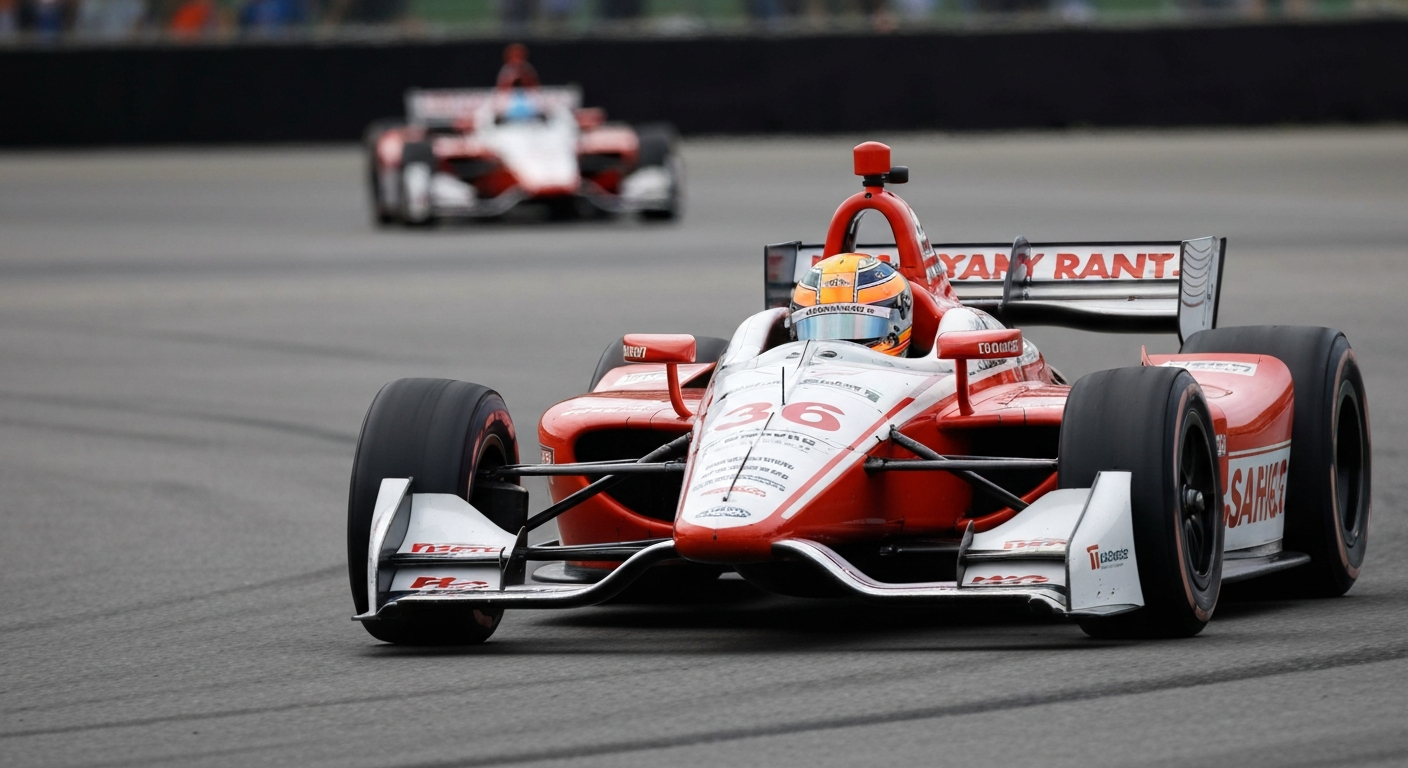
Suggested image: A licensed race-action photograph of Marcus Armstrong in his Meyer Shank Racing livery at an IndyCar event (available from Motorsport Images / Getty Images, credited to Lumen via Getty Images). Caption: 'Marcus Armstrong racing in IndyCar, his contracted salary with Meyer Shank Racing represents the primary income line in the net-worth estimate.' Use only properly licensed images; do not reproduce watermarked previews.
How this profile fits alongside other Marcus net-worth profiles
Marcus Armstrong sits in an interesting position relative to some of the other drivers and athletes profiled on this site. His wealth-building story is fundamentally about a young professional athlete still in the income accumulation phase, without the business diversification or sponsorship scale that creates genuinely large net worths at this age. Compared to a figure like Marcus Tavernier, who operates in European football with its own salary structures, or a Marcus Taylor working the motivational speaking and media circuit, Armstrong's income is more concentrated in one stream, his race seat, and more dependent on continued competitive results to maintain and grow it. That concentration is the key financial risk in his profile: a career setback or team change to a smaller budget would compress the salary range meaningfully. The upside, if results continue to improve and a top-three IndyCar team seat materialises, is that the USD 3.5M upper bound of this estimate could start to look conservative within a few seasons.
FAQ
What is Marcus Armstrong’s best‑effort net worth (as of 25 July 2026)?
Best‑effort estimated range (dated 25 July 2026): USD 0.8 million – USD 3.5 million. This is an inference based on public career records, typical IndyCar/junior‑series pay bands, visible sponsorships, and the absence of any disclosed multi‑million contracts. See supporting anchors: INDYCAR team announcement (Armstrong joins Meyer Shank Racing), public reporting on IndyCar top‑driver packages (Pato O'Ward), and career stats (DriverDB). (Sources: INDYCAR.com 19 Sep 2024: https://www.indycar.com/News/2024/09/09-19-Armstrong-MSR; NBC Sports: https://www.nbcsports.com/motor-sports/news/indycar-reacts-to-pato-owards-10-million-salary-revelation-its-great-for-the-driver-market; DriverDB: https://www.driverdb.com/drivers/marcus-armstrong).
How reliable is this net‑worth estimate?
This estimate is explicitly a scenario model, not an audited figure. Reliability is limited because: (a) teams rarely disclose driver salaries; (b) sponsorship contract values and private investments are typically confidential; and (c) no public company filings or property titles were found linking Armstrong to significant assets. The profile therefore uses documented race results, published series prize‑fund announcements, and market comparators to build a conservative–optimistic range. Key evidence gaps are listed in the methodology. (See research note on evidence gaps and methodology: MarcusArmstrong.com; FIA/F2 event PDFs; corporate registry checks.)
Does the estimate include endorsements, appearance fees and taxes?
The published range attempts to include likely endorsement and appearance income where there is credible public evidence (team livery sponsors, named brand partnerships on the driver's official site). However, because sponsorship contracts and appearance fees are rarely public, these items are modelled with low/high multipliers and carried as uncertainty in the range. Taxes and private living/competition expenses are not itemised line‑by‑line but are reflected implicitly in the conservative down‑side of the range. (See methodology and source classes for sponsor verification: MarcusArmstrong.com; team media galleries; licensed images.)
What primary sources would make this estimate more precise?
Definitive improvements require: (1) a driver contract or a team‑issued compensation summary; (2) sponsor/brand contracts naming Armstrong and fees; (3) series or event organiser prize payout schedules tied to specific results; (4) corporate registry documents showing shareholdings or directorships; and (5) property title records. The article lists these as missing evidence and where to obtain them (team press releases, FIA/F2/F3 PDFs, national companies office). (See research: INDYCAR press release; FIA event PDFs; NZ Companies Office searches.)
What income sources were modelled to produce the range?
Modeled income sources: race salaries (scenario based on IndyCar pay bands anchored to public examples), prize money and series bonus programs (checked against FIA/F2/F3 announcements), sponsorships and endorsements (visible livery and official site mentions), team logistical support and paid‑seat funding in junior years, appearance fees, and potential family/backer contributions. Each input is sourced where possible; when not available, low/high scenario multipliers were applied. (See source anchors: INDYCAR.com; FIA Formula 3 prize fund announcement; DriverDB; Racer commentary on seat costs.)
How was the career timeline used to estimate earnings?
The timeline compiles season‑by‑season team moves, wins and podiums from authoritative race records (e.g., DriverDB and FIA/F2 race reports). Higher performance seasons increase probability of prize/bonus payments and sponsor interest; team signings (e.g., Meyer Shank Racing announcement) mark likely transitions to higher salary tiers. Each timeline item is referenced to public race PDFs or team press releases and used to populate year‑by‑year scenario receipts. (See DriverDB and FIA F2 press reports for race results; INDYCAR.com for team signings.)
Marcus Gunnarsen Net Worth: Estimate, Sources, and How It’s Calculated
Estimated Marcus Gunnarsen net worth explained with sources, calculation method, and confidence level plus name disambig