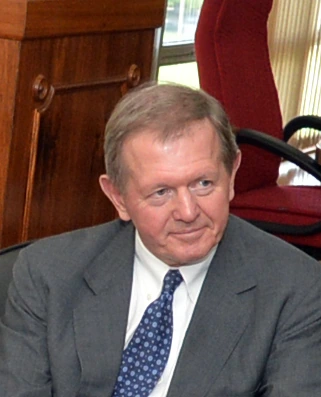
The Marcus Swanepoel most people are searching for is the South African-born tech entrepreneur who co-founded the cryptocurrency exchange and wallet platform Luno (originally called BitX) in 2013, grew it to millions of users across Africa, Europe, and Southeast Asia, and then sold it to Digital Currency Group (DCG) in September 2020. His estimated net worth in 2026 lands in a wide range depending on the source, from around $1. Because the details of his finances are private, Marcus Hyde net worth figures you see online are best treated as rough estimates rather than confirmed numbers. 4 million on low-confidence aggregator sites up to figures that could reasonably reach tens of millions once you account for acquisition proceeds and equity stakes, but no verified public figure exists because his finances are private. Treat any single number you find online as a rough, assumption-heavy estimate.
Marcus Swanepoel Net Worth: How It’s Estimated and Updated


Who Marcus Swanepoel is (and which one)

Marcus Swanepoel is a fintech and crypto entrepreneur, best known as the co-founder and former CEO of Luno. He holds an MBA from INSEAD (class of 2010, the Fontainebleau campus), and he was already presenting as Luno's CEO at the INSEAD Alumni Forum Americas in New York in 2016, when the company was still trading under its original name, BitX. He and co-founder Timothy Stranex launched the business in 2013 with a focus on making cryptocurrency accessible in emerging markets, particularly across Africa.
His LinkedIn profile places him in the Los Angeles metropolitan area and lists him as Founder and CEO of a newer venture called Rokk, alongside his former role at Luno. So as of mid-2026, he has moved on operationally from Luno and is building something new. It is worth flagging that there are other people named Marcus Swanepoel in the world, including individuals in South African sports and business circles, so if you are researching a different Marcus Swanepoel, you are looking at the wrong profile. The crypto/fintech founder is the one driving nearly all the search traffic on this name.
Net worth estimate: how to find it and what it means
Net worth is a simple concept: total assets minus total liabilities. The complication with someone like Marcus Swanepoel is that nearly all of his meaningful assets, such as equity stakes, acquisition proceeds, and private company ownership, are not disclosed publicly. When a site quotes a specific number, they are estimating based on publicly observable signals, not verified financial statements.
The two figures circulating online right now are approximately $1.44 million (blank" rel="noopener noreferrer">from PeopleAi, which provides a year-by-year estimate and shows $1.3 million for 2025 and $1.15 million for 2024) and approximately $2 million (cited by WikiFX, a broker review platform). Both of these are suspiciously low for someone who co-founded and sold a company that had blank" rel="noopener noreferrer">6 to 7 million customers at the time of its acquisition by DCG in 2020. These figures likely reflect methodology limitations, specifically an inability to access private acquisition terms, rather than his actual financial position. A more realistic working estimate, accounting for startup equity and acquisition proceeds in a meaningful crypto deal, would plausibly put him in the range of tens of millions of dollars, though that cannot be confirmed without deal disclosure.
Key income sources: career, business, and beyond

Marcus Swanepoel's wealth story is primarily an entrepreneurial equity story, not a salary or endorsement story. Here are the main income drivers worth understanding:
- Luno equity and acquisition proceeds: Co-founding Luno in 2013 and scaling it to millions of users across markets like Nigeria, South Africa, Malaysia, and the UK would have given him a meaningful equity stake. When DCG acquired Luno in September 2020, the deal terms were not publicly disclosed, but acquisition proceeds to co-founders at that scale typically represent the largest single wealth event in an entrepreneur's career.
- Executive compensation at Luno post-acquisition: He remained as CEO through the DCG acquisition and transitioned to Executive Chairman in March 2023, meaning he drew executive compensation for several years after the deal closed. That salary and any performance bonuses would have supplemented whatever he received at closing.
- Rokk (current venture): As of mid-2026, he is listed as Founder and CEO of Rokk. Early-stage startup roles rarely pay large salaries, but founders accumulate equity that can be worth substantially more later. This is a future wealth driver, not a current one.
- Potential crypto holdings: Given his decade-plus career at the center of the cryptocurrency industry, it is reasonable to assume he holds personal cryptocurrency positions, though the size and composition are entirely unknown.
- Speaking, advisory, and board roles: High-profile fintech founders with INSEAD credentials and a sold company on their resume often earn speaking fees and advisory equity, though these are secondary income streams.
There are no confirmed major endorsement deals or media income streams tied to Marcus Swanepoel. His public profile is that of a builder and operator, not a media personality. That makes him quite different from, say, a Marcus in entertainment or sports whose income is more transparent through contracts and public filings.
Assets and spending factors that affect the estimates
Even if you had a good guess at his gross acquisition proceeds, translating that into current net worth requires accounting for several variables that nobody outside his household actually knows:
- Real estate: He is currently based in the Los Angeles area, one of the most expensive real estate markets in the world. Property ownership there could represent a significant asset or a significant liability depending on purchase timing and mortgage structure.
- Tax obligations: A large acquisition payout in 2020 would have triggered substantial capital gains tax, especially if he was based in a high-tax jurisdiction at the time. Tax liabilities can dramatically reduce the net figure from a headline acquisition number.
- Reinvestment and startup costs: Founding Rokk means he is almost certainly deploying capital into a new venture, which is a use of assets rather than an accumulation of them in the short term.
- Crypto portfolio volatility: If he holds meaningful cryptocurrency positions, the market swings between 2020 and 2026 could have dramatically increased or decreased that portion of his net worth multiple times over.
- Living expenses: Relocating to Los Angeles and maintaining a lifestyle consistent with a successful founder-executive carries material ongoing costs that reduce liquid wealth over time.
This is why a responsible net worth estimate for someone like Marcus Swanepoel needs to be expressed as a range rather than a precise figure. The factors above are real and significant, and they pull in different directions depending on choices and timing that only he knows about.
Timeline of wealth building: major milestones

| Year | Event | Wealth Impact |
|---|---|---|
| 2010 | Graduates from INSEAD MBA program | Foundation for business network and credibility; minimal direct financial impact |
| 2013 | Co-founds BitX (later Luno) with Timothy Stranex | Acquires founder equity stake; early startup phase with high risk and low liquidity |
| 2016 | Presenting as CEO at INSEAD Alumni Forum Americas; company rebranded to Luno | Growing recognition; continued equity accumulation as company scales |
| 2020 (Jan–Sep) | Luno grows from 6 million to 7 million customers; DCG acquisition announced September 2020 | Largest likely single wealth event; acquisition proceeds to co-founders (terms not disclosed) |
| 2020–2023 | Continues as CEO of Luno under DCG ownership | Executive salary and potential performance compensation post-acquisition |
| March 2023 | Transitions from CEO to Executive Chairman as James Lanigan becomes CEO | Reduced operational role; maintains governance involvement and presumably some compensation |
| 2024–2026 | Founds and leads Rokk as CEO; based in Los Angeles area | Early-stage venture; equity accumulation in new company; net worth in transition phase |
How sources estimate net worth and why they often get it wrong
Most celebrity and executive net worth sites use one of two approaches: they either scrape and aggregate figures from other sites (which means errors multiply rather than cancel out), or they apply a formula based on observable data like LinkedIn seniority, company funding rounds, and Google search volume. Neither approach is reliable for a private individual who has not disclosed deal terms.
The $1.44 million figure from PeopleAi is a textbook example of a formulaic estimate that almost certainly underestimates true wealth. The site shows suspiciously smooth year-over-year growth ($1.15M in 2024, $1.3M in 2025, $1.44M in 2026), which looks like a model output, not real financial tracking. The $2 million figure from WikiFX is similarly unsourced. Neither figure adequately accounts for what a successful acquisition exit typically produces.
A more credible approach would note that: the Luno acquisition by DCG in 2020 involved a company with millions of active users in high-growth markets; DCG is a major institutional player in crypto that has acquired multiple significant businesses; and typical founder equity in a company at that scale and stage would represent a meaningful multimillion-dollar payout at acquisition. Without disclosed deal terms, the honest answer is that his net worth is unknown, but likely well above what aggregator sites currently report. If you are specifically looking for Marcus Shoberg net worth, treat it as unverified until reliable sources publish concrete financial disclosures. If you are researching Marcus Schrenker net worth, look for similarly specific, source-backed details rather than relying on generic name-matching estimates net worth is unknown. For the most accurate take on Marcus Kruger net worth, rely on the same reasoning: no verified deal terms have been published for his personal finances.
How to verify updates and avoid misinformation
If you want to track Marcus Swanepoel's financial profile over time, here is how to do it responsibly:
- Follow his LinkedIn profile directly. It is the most frequently updated public record of his current roles (currently listing Rokk as his primary venture) and will be the first place any new company announcement or fundraising round appears in his professional context.
- Watch for Rokk funding announcements. If Rokk raises a venture round, the deal disclosure (even partial) will give you a valuation datapoint that indirectly signals his equity stake's value. Watch TechCrunch, Crunchbase, and PitchBook for startup funding news.
- Monitor DCG and Luno press releases. The March 2023 leadership transition was announced via Business Wire. Any changes to his Executive Chairman role, or Luno news that references him, will likely surface on Business Wire or Luno's official newsroom.
- Cross-check multiple sources and apply skepticism. If a site quotes a very precise figure like $1.44 million for a private founder-executive, treat it as an estimate with low confidence, not a fact. Look for the methodology before trusting the number.
- Watch for name confusion. Marcus Swanepoel is not a household name, so search results occasionally surface other Marcus Swanepoels or get tangled with similarly named people in South African business or sports. Confirm you are reading about the Luno/Rokk founder before accepting any fact.
- Check this site for updated estimates. We update profiles when new credible information surfaces, and we label our confidence level explicitly so you can judge how much weight to put on any figure.
One practical tip: if you see a site claiming a net worth figure for Marcus Swanepoel without mentioning Luno, DCG, or Rokk, it is almost certainly pulling data from a generic name-matching algorithm rather than researching the actual person. Because the exact figures are not public, the Marcus Nispel net worth claims you see online should be treated as unverified estimates Marcus Swanepoel. Those figures are worth ignoring entirely.
Marcus Swanepoel is a genuinely interesting wealth story precisely because so much of it is private. He built something real, sold it to a major institutional buyer at what was likely a strong valuation, stayed involved in governance, and is now building again in a new city with a new venture. That kind of serial founder trajectory is where real wealth compounds over time, even if the numbers are not on a spreadsheet anyone can access today. If you are curious about how other business-world Marcuses compare in terms of publicly trackable wealth, profiles like Marcus Wallenberg (Swedish banking dynasty) or Marcus Walberg (Fatburger franchise) offer very different wealth-building models that are somewhat more transparent, given their public company connections. If you want a point of comparison for public, easier-to-verify wealth, you can also look up marcus wallenberg net worth and how his banking-dynasty holdings translate into estimates.
FAQ
How can I tell whether a “Marcus Swanepoel net worth” result is about the Luno co-founder or the wrong person?
Look for explicit ties to Luno (or its original name BitX) and the 2020 Digital Currency Group sale. If the page does not mention those, it is likely doing name-matching across different people and the net worth number should be treated as unreliable.
What signals tell me a net worth site is estimating instead of using verifiable information?
If the site cannot explain where it got the acquisition terms, founder equity percentage, or any licensing of public filings, it is essentially producing a guess. A quick tell is whether the number is presented as exact rather than a range, because private finance usually prevents precision.
If the exact deal terms are private, how should I estimate his net worth range myself?
Use a range and build your own sensitivity. For example, try low, base, and high assumptions for (1) founder equity at exit, (2) any escrow or retention arrangements, and (3) how much was sold versus held. Then update later when you see concrete milestones for the new venture (Rokk) such as funding rounds or credible revenue signals.
Why can’t I just take Luno’s acquisition value and convert it into Marcus Swanepoel’s net worth?
Acquisition headlines do not equal founder payouts. Some proceeds may be tied up in escrow, reinvested, deferred, or subject to post-closing performance, so a rough “company valuation” is not the same as the cash or liquidation value that reaches the founder personally.
Should I treat his net worth as salary-based, or does it depend more on equity and exit proceeds?
For this specific case, lack of salary and endorsement income information usually matters less than equity value and any continuing ownership. If a source focuses only on compensation or media income, it is missing the dominant wealth driver for a founder-exit story.
How do crypto-related assets change the reliability of net worth estimates?
Yes, especially if the venture involves token holdings, early equity, or private-company shares. In crypto and fintech, mark-to-market assumptions can move estimates dramatically, so two sites can both be “right” under different valuation models.
Why might some estimates for Marcus Swanepoel be suspiciously low (for example, around a few million dollars)?
If a figure is extremely low compared with the implied scale of a major exit, it might be undercounting founder equity, assuming no payout, or failing to incorporate a retained stake. Rather than dismiss it instantly, check whether the methodology mentions equity stakes, deal structure, or only uses generic proxies.
What practical updates should I watch to get a better sense of his net worth over time?
Track whether he is listed as an officer, director, or substantial stakeholder in publicly referenced entities, and whether any new Rokk milestones appear in credible business reporting. Those signals can tighten assumptions over time, whereas repeated “year-by-year net worth” graphs without sources often reflect model outputs.
Marcus Wallenberg Net Worth Estimate and How It’s Calculated
Estimate of Marcus Wallenberg net worth with sources, calculation steps, and how to verify a current range yourself.