
The Marcus Pfister most people are searching for is the Swiss children's author and illustrator born on July 30, 1960, in Bern, Switzerland, the creator of The Rainbow Fish. His estimated net worth, based on the best available (though not primary-record-verified) sources, likely falls somewhere in the $5 million to $10 million range as of May 2026. That range is plausible given the documented commercial scale of his work, but no auditable, primary-source figure exists in the public domain. Treat any single hard number you see online with real skepticism.
Marcus Pfister Net Worth: Estimate, Sources, and How It’s Calculated

Daniel Rothstein
22 May 2026

Which Marcus Pfister people actually mean

When someone types 'Marcus Pfister net worth' into a search engine today, they almost universally mean the Rainbow Fish guy. The confirmed biographical anchors are: born July 30, 1960, in Bern, Switzerland; trained in graphic design; worked briefly at an advertising agency from 1981 to 1983; and then launched a career as a children's book author and illustrator. His official site and his publisher NorthSouth Books (the English-language arm of the Swiss publisher NordSüd Verlag) both confirm this identity clearly.
Why does disambiguation matter? Because net worth websites frequently conflate people who share a name, especially when one person is more obscure. If you land on a page claiming a net worth for 'Marcus Pfister' but the bio mentions a different birthdate, city, or profession, that number almost certainly belongs to someone else or is fabricated. false marcus sweeney net worth.
If you came here because you saw a claim about Marcus Schenkenberg net worth, use the same skepticism and verification steps, since name confusion can easily produce fabricated figures. Always cross-check the four identity markers: birthdate (July 30, 1960), location (Bern, Switzerland), profession (children's author/illustrator), and signature work (The Rainbow Fish, first published 1992). If you are also checking other name-matches, you can compare how different biography markers shape results like marcus scribner net worth.
What net worth actually means (and why online figures are messy)
Net worth is a balance-sheet concept: total assets minus total liabilities. Assets include cash, investments, real estate, business equity, and intellectual property interests. Liabilities include mortgages, loans, and any outstanding financial obligations. The result is what you'd theoretically have left if you liquidated everything and paid every debt. That's the definition, and it matters because a lot of celebrity wealth sites don't use it correctly.
Many 'net worth' pages online are actually modeling income or career earnings, not a true balance sheet. They estimate how much someone has earned, then make assumptions about spending and saving, without access to actual bank statements, property records, investment portfolios, or debt levels. For a private individual like Marcus Pfister, who has never been on a Forbes list and whose financial life is not publicly documented, that gap between 'earned income' and 'verified net worth' is especially wide. Keep that in mind every time you see a dollar figure attached to his name.
The estimated net worth range (as of May 2026)

The figures floating around online for Marcus Pfister's net worth cluster in a broad range. A site called CelebrityHow places the estimate at $6 million. Celebrity-Birthdays lists $5 million (with a last-updated date of December 11, 2023). A platform called PeopleAI shows a figure around $9.96 million as of April 2026, generated from a year-by-year estimation model. None of these sources provide auditable primary financial records, they all acknowledge relying on proxies like career history, public information, and general modeling assumptions.
Given the documented scale of The Rainbow Fish franchise, over 30 million copies sold, translations into 60-plus languages, an animated television adaptation, and decades of ongoing catalog sales, a net worth in the $5 million to $10 million range is a reasonable working estimate.
That range reflects what you'd expect from sustained royalty income and licensing revenue over more than 30 years, even after accounting for taxes (Switzerland applies its own tax structure), living expenses, and the fact that not every dollar earned becomes a dollar of net worth. I would not stake anything on a single number within that range, but I also wouldn't dismiss it as wildly implausible.
The honest answer is: plausibly in that ballpark, not verifiably pinned to any specific figure. His marcus scribner net worth is also widely discussed online, but reliable primary documentation is rare.
| Source | Estimate | Last Updated | Methodology Transparency |
|---|---|---|---|
| CelebrityHow | $6 million | Unclear (2025 page) | Low — cites 'online sources' only |
| Celebrity-Birthdays | $5 million | December 11, 2023 | Low — no primary record support |
| PeopleAI | $9.96 million | April 2026 | Low — estimation model, not balance sheet |
| Forbes / verified finance outlet | Not listed | N/A | No verified entry found as of May 2026 |
How Marcus Pfister likely built his wealth
Pfister's financial story is almost entirely an intellectual property story. He started his career in an advertising agency in the early 1980s, which gave him design and illustration skills but not wealth. The turning point was The Rainbow Fish in 1992, a picture book featuring distinctive holographic foil scales that became an immediate international phenomenon. From there, the wealth drivers break into a few clear channels.
Book royalties
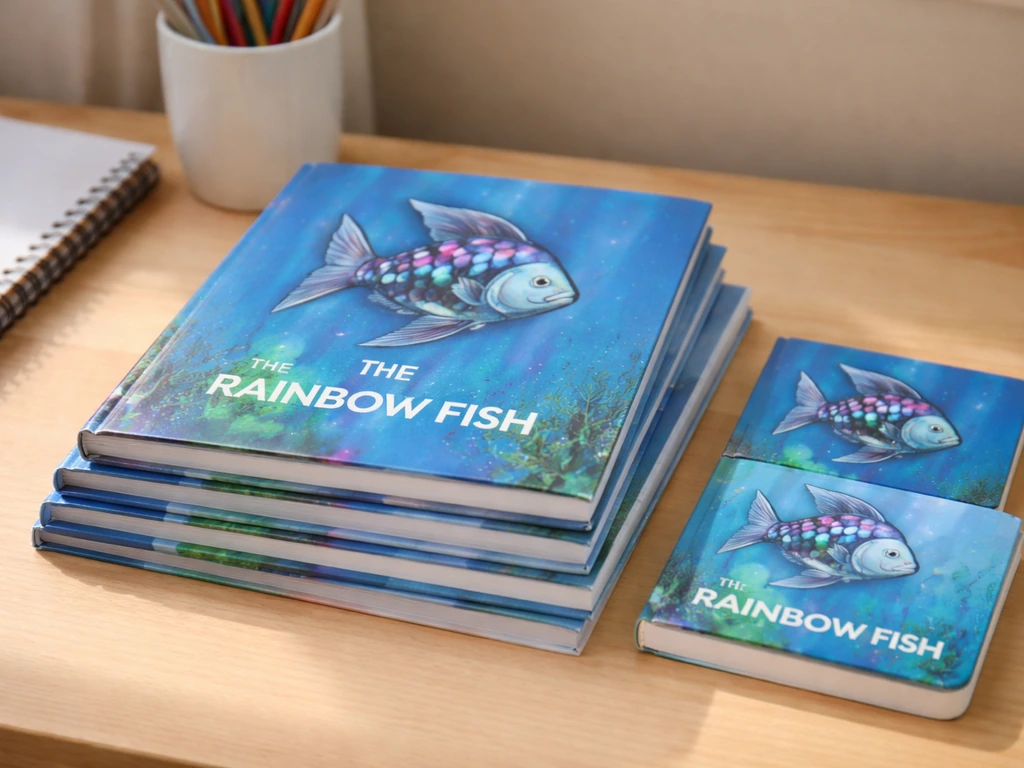
Authors of bestselling picture books typically earn royalties in the range of 5% to 15% of the cover price per copy sold, depending on the contract. With over 30 million copies sold across the Rainbow Fish series and multiple follow-up titles, even a conservative royalty rate on that volume produces substantial cumulative income. Backlist sales (older titles continuing to sell year after year) are particularly valuable because the creative work is already done, each new copy sold is essentially pure margin against past effort.
Licensing and adaptation revenue
The Rainbow Fish was adapted into an animated television series, which means licensing fees and ongoing royalty streams from broadcast rights, home video, and potentially streaming. Merchandise licensing, toys, educational materials, branded products, is another channel that a property of this scale commonly generates. These deals are typically negotiated by the publisher or a rights agent, and the author's share depends on the original contract structure. That said, for a franchise of this visibility, licensing income is a realistic wealth contributor.
Translation and international rights
With translations into 60-plus languages, Pfister's work generates royalty streams from publishers in dozens of countries simultaneously. Each new translation deal brings an advance and ongoing royalties. The international footprint of The Rainbow Fish is unusually large for a picture book, and that geographic diversification means income keeps coming in from markets at different economic growth stages.
Continued publishing output
Pfister didn't stop at one book. He continued writing and illustrating children's books from Bern, building a catalog that extends his revenue base beyond a single title. On Pfister’s official creator bio, he is described as continuing to create books in Bern, reinforcing that ongoing output is part of his long-running career continued writing and illustrating children's books from Bern. Each new publication adds to the royalty pool and keeps his backlist relevant in retail and library channels.
Factors that can move his net worth up or down over time
Net worth for a royalty-driven creator is not a static number. Several forces can push it significantly in either direction, sometimes within a single year.
- Backlist sales velocity: If The Rainbow Fish gets adopted into a new curriculum, goes viral on social media, or gets re-released in a new format, annual royalty income spikes.
- New adaptation deals: A streaming adaptation, a new television run, or a theatrical version could generate a significant one-time licensing payment plus ongoing residuals.
- New translations or territorial expansions: Opening new language markets adds income streams that continue for the life of those contracts.
- Currency exchange rates: Pfister earns in Swiss francs (CHF) and likely multiple foreign currencies. A strong CHF can reduce the USD equivalent of his income, and vice versa — relevant for anyone comparing estimates across years.
- Swiss tax and investment outcomes: Switzerland has its own tax structure, and how Pfister manages investments and retirement planning directly affects net worth. These details are entirely private.
- Real estate: Property ownership in Switzerland (Bern in particular) can be a significant asset, and property values there have historically been strong. Any purchases or sales affect the asset side of the ledger.
- Time lag in data: Most net worth estimate sites have data that is months or years old. A big licensing deal in 2025 might not show up in any public estimate until 2027.
How to evaluate conflicting reports and spot red flags

Net worth figures for private individuals like Pfister are genuinely hard to verify, so conflicting numbers are not surprising, they're expected. What matters is whether you can tell the difference between a reasonable estimate and a fabricated one. Here are the patterns to watch for.
- No methodology disclosed: If a site lists a number without explaining how it was calculated — even broadly — treat it as a guess. Credible estimates at least say what they're modeling (royalties, career earnings, industry comparables).
- Identity conflation: Search for other people named Marcus Pfister. If a net worth page's bio details don't match the author's confirmed birthdate (July 30, 1960), birthplace (Bern, Switzerland), or profession (children's author/illustrator), the number is almost certainly wrong for this person.
- Outdated 'last updated' dates with no explanation: A page that says 'last updated December 2023' but hasn't adjusted for any events since then is stale data dressed up as current. The PeopleAI page generates year-by-year numbers algorithmically, which sounds precise but is not grounded in actual financial records.
- Income confused with net worth: Some pages describe how much someone 'earns per year' and call that their net worth. Those are completely different things. Annual royalty income of $500,000 does not mean a net worth of $500,000 — it means one year's income before tax and expenses.
- Single hard number without a range: Real financial estimates for private individuals involve genuine uncertainty. A site that gives you a single precise figure (say, '$6,000,000 exactly') is projecting false confidence. Honest estimates give ranges.
- Unsupported 'sources': Sites that claim to derive figures from 'Wikipedia, Google Search, Yahoo Search' are not using primary financial records. Wikipedia does not contain net worth data for Marcus Pfister. These citations are padding, not sourcing.
Where to look next and how to verify
If you want to go further than a rough estimate, here are the most productive places to look, keeping in mind that primary financial records for private Swiss individuals are not easily accessible from outside Switzerland.
- Official Rainbow Fish site (rainbowfish.us): Confirms Pfister's identity, biography, and publishing history. Not a financial source, but essential for identity anchoring before evaluating any net worth claim.
- NorthSouth Books author page: The English-language publisher page confirms his publishing relationship, series history, and career timeline. Useful for verifying which books exist and the scale of his catalog.
- ZEFIX (the Swiss commercial register, available at zefix.ch): If Pfister or a related entity (for example, a rights-holding company) is registered as a Swiss business, this would show basic registration details. Search by exact name. No specific entity was found in the sources reviewed, but it's worth checking.
- Swiss Federal Institute of Intellectual Property (IGE, at ige.ch): Trademark and intellectual property registrations in Switzerland are searchable here. If Pfister or an entity he controls holds Swiss trademarks on the Rainbow Fish name or characters, this would show up.
- Canton of Bern property records: Swiss cantonal property registers are not uniformly accessible online, but for a Bern resident, cantonal land registry (Grundbuch) records can in principle be checked through official channels. This requires knowing the exact address or entity name.
- Major verified finance outlets: Check whether Forbes or a comparable credible outlet has ever profiled Pfister. As of May 2026, no such verified profile appears to exist — which itself is useful information. Absence from Forbes' lists means no independently verified figure is available.
For context, Marcus Pfister sits in an interesting category among notable people named Marcus: his wealth is almost entirely IP-driven rather than salary, endorsement, or business ownership in the conventional sense, which makes him different from athletes or entertainers whose earnings are more publicly documented. If you're interested in how net worth estimates are built for other people in this name group, the same verification framework, identity anchoring first, then methodology check, then primary record search, applies across all of them.
The bottom line: a net worth in the $5 million to $10 million range is a defensible working estimate for Marcus Pfister as of May 2026, grounded in the documented scale of The Rainbow Fish franchise rather than verified financial records. Treat it as a plausible ballpark, not a bank balance. Any source giving you a more precise number without showing its work is selling confidence it hasn't earned.
FAQ
How can I tell if a “Marcus Pfister net worth” number is probably fabricated?
Check whether the page includes the identity markers (July 30, 1960, Bern, children’s author/illustrator, The Rainbow Fish first published 1992). If the bio details do not match, treat the figure as unreliable. Also look for whether the site explains how it converts royalties and licensing into assets, without that methodology, a precise dollar figure is usually guesswork.
Is “net worth” on these sites actually the same as “annual income” or “career earnings”?
Not usually. Many listings model lifetime earnings or estimated annual revenue and then label it as net worth. True net worth requires assets minus liabilities, which cannot be audited for a private individual without records, so be skeptical when you see high “net worth” numbers that are not accompanied by balance-sheet assumptions.
Why does his net worth estimate vary so much from one website to another?
Most estimates rely on different assumptions for royalty percentages, copy sell-through, backlist growth, licensing performance, tax effects, and contract terms for translation and media rights. A small change in assumed royalty rate or franchise revenue can swing the implied wealth by millions, especially for long-running IP.
What would be the biggest factors that could push Marcus Pfister’s wealth above the $10 million ceiling?
A major upward driver would be unusually favorable contract terms (higher royalty rates than typical picture-book ranges), sustained or renewed licensing that extends far beyond the original adaptation, or long-term ownership of rights that increases equity-like value. Another possibility is substantial real estate or investment holdings, but those are not publicly documented in the way royalties are.
What could make the $5 million to $10 million range too high?
If royalties were lower than commonly modeled (for example, due to unfavorable early contracts), if translation and merchandising revenues underperformed relative to expectations, or if significant liabilities and costs reduced net assets (including taxes and living expenses). Also, estimates often assume catalog sales remain strong; a weaker backlist curve would lower the long-term income stream.
If the numbers are guesses, how can I produce my own reasonable estimate?
Start with conservative assumptions: estimate annual royalty and licensing cash flow from Rainbow Fish over recent years, apply a realistic tax-and-expense drag, then discount future income and convert it to a wealth-like figure. Because you do not have debt or specific asset values, treat the result as a range, not a single target number.
Does the fact that he is Swiss affect net worth estimates?
Yes, at least indirectly. Swiss tax structure and personal wealth management practices can change how much of gross income becomes retained assets. Many online models do not incorporate Switzerland-specific assumptions, so the implied net worth can be overstated or understated depending on the model’s tax and spending assumptions.
Could there be confusion with other people named Marcus Pfister or similar names?
Yes. Search results can mix identities if a site does not clearly match the birthdate, birthplace, profession, and signature work. If the content does not consistently align with The Rainbow Fish creator profile, you are likely looking at a different person’s wealth or a fabricated blend of multiple biographies.
Do advances and royalties from translations mean the net worth is higher immediately?
Not necessarily. Translation deals often include an advance plus ongoing royalties, but advances can be offset by contract splits, agent or publisher arrangements, and tax. Net worth only reflects accumulated retained assets, so a year with a large advance might not translate into a proportionally large year-over-year net worth increase.
Is it possible to verify Marcus Pfister’s net worth using public records?
For a private individual in Switzerland, direct balance-sheet verification is generally limited. Public sources may confirm publishing history and sales scale, but they usually do not reveal personal bank balances, investment portfolios, or debts required for an auditable net worth calculation.
What is a reasonable way to interpret “most likely $X million” claims?
Treat them as a modeled range anchored to franchise performance, not as a reported financial statement. If a site gives a narrow exact number without showing the royalty, licensing, and asset accumulation logic, prefer a broader range and focus on whether the underlying assumptions are plausible for the Rainbow Fish scale.
Next Article
Marcus Sherels Net Worth: Estimate, Calculation, and How to Verify
Get a current estimate of Marcus Sherels net worth plus the calculation logic and a checklist to verify it.