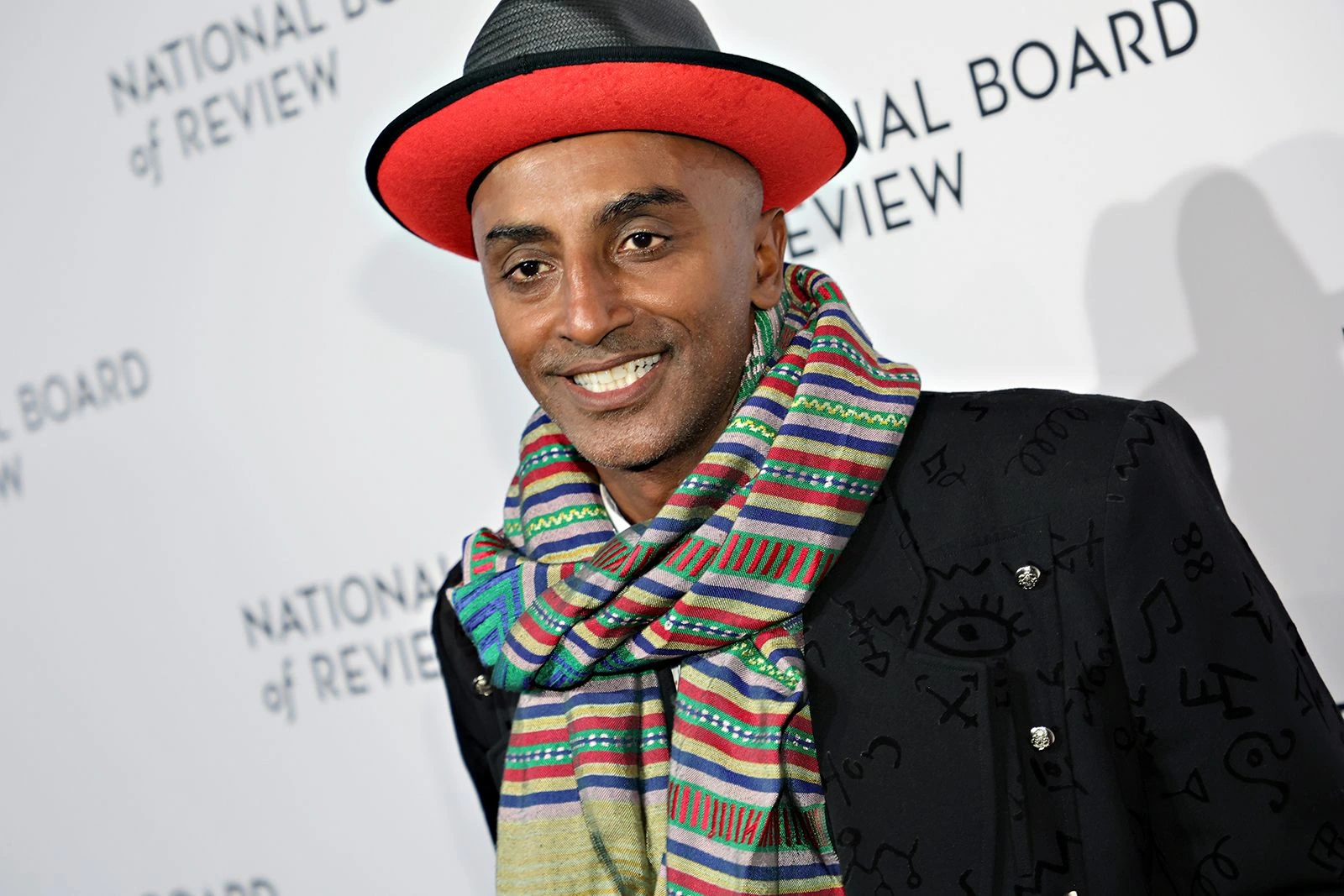
Who Marcus Samuelsson is, and why his career generates real wealth
Marcus Samuelsson is an Ethiopian-born, Swedish-raised chef and media personality who became one of the most recognizable culinary figures in the United States. He earned his first major accolades as executive chef at Aquavit in New York, then built a broader empire around Red Rooster Harlem, the community-anchored restaurant he co-founded with Andrew Chapman. On television, he has appeared as a judge on Chopped, competed on Top Chef Masters, judged The Taste, and hosted an Audible original audio series called "Seat at the Table" alongside Jonathan Waxman. His public profile is amplified by cookbooks, brand partnerships, and a genuine reputation for community investment in Harlem, all of which translate into commercial and licensing opportunities that go well beyond what a single restaurant can generate.
The wealth story here is about compounding career moves, not one single windfall. Samuelsson arrived in the US with $300 and built financial stability through restaurant revenue, media fees, and brand deals layered on top of each other over decades. That context matters when you're trying to understand how a chef reaches a $5 million to $20 million estimated net worth.
How his net worth is actually built

Restaurant ownership and the Samuelsson Group
The Marcus Samuelsson Group is the business backbone. Before COVID hit in 2020, a CNBC report cited a spokesperson estimate of roughly $75 million in annual revenue across all of the group's restaurants. Revenue dropped approximately 80% during 2020, which was a significant financial disruption for the whole operation. By 2026, the restaurant landscape has stabilized, but that 2020 hit illustrates why restaurant revenue is not the same as profit or personal net worth. Margins in full-service restaurants typically run 3% to 9%, meaning a $75 million revenue year might produce $2 million to $6 million in operating profit across the entire group, which is then split among investors, partners, and operational reinvestment before Samuelsson takes a personal share.
Red Rooster Harlem is the flagship and the most publicly associated brand. Samuelsson also held a partner stake in August in the West Village, demonstrating that his ownership model spans multiple concepts rather than one standalone location. The equity value of these restaurant stakes is the hardest figure to pin down, because private restaurant businesses are not publicly traded and their valuations are rarely disclosed.

Television judging and hosting roles are a meaningful but often underestimated income stream for top chefs. Appearing on Chopped, Top Chef Masters, and The Taste generates appearance fees, but the bigger value is the brand visibility that feeds restaurant reservations, book sales, and brand partnership negotiations. The Audible deal for "Seat at the Table" is a good example of how media deals have expanded beyond traditional TV into audio and digital, which typically come with both upfront fees and royalties.
Brand deals, endorsements, and licensing
This is where Samuelsson's wealth story gets more interesting than a typical chef biography. He was named SKYY Vodka's first culinary ambassador in 2012 under an exclusive partnership. He partnered with Bombay Sapphire around the launch of Bombay Bramble in 2021, tying his name to a Harlem-focused art and advertising campaign. Ben's Original (owned by Mars) featured him in a branded "My Original Recipe" chef story series. And in 2024, West Elm launched a tableware and home goods collection in collaboration with him under the Williams-Sonoma portfolio. Each of these deals carries a fee structure, often including both upfront payment and royalties tied to product performance. Stacked together, they represent a meaningful diversification away from restaurant income.
Cookbooks and intellectual property
Samuelsson has published multiple cookbooks, which generate advances, royalties, and ancillary licensing income. Cookbook advances for a chef of his profile typically range from low six figures to high six figures per title, with ongoing royalties that taper over time. The intellectual property value of his brand name, recipes, and culinary identity also feeds into licensing arrangements for products like the West Elm collection.
Salary vs. assets: understanding the difference

<a data-article-id="6FD067DD-FFF7-466D-BCEE-9035B9BA5020">Net worth is not the same as annual income</a>, and it is worth being clear about that distinction. Samuelsson's net worth represents the estimated total value of everything he owns (restaurant equity stakes, real estate, cash, investments, brand/IP value) minus what he owes (business loans, mortgages, any outstanding debt). His annual earnings from TV fees, endorsements, restaurant draws, and book royalties contribute to that number over time, but any given year's income is not the same as his total accumulated wealth.
| Wealth Component | Type | Estimated Contribution to Net Worth |
|---|
| Restaurant equity stakes (Red Rooster, others) | Asset | Likely largest single component, but illiquid |
| Annual restaurant profit share | Income | Variable; COVID demonstrated downside risk |
| TV/media appearance fees | Income | Recurring but not disclosed; builds over career |
| Brand deals and endorsements | Income | Meaningful; multiple deals since 2012 |
| Cookbook advances and royalties | Income + IP asset | Moderate; builds catalog value over time |
| Product licensing (West Elm, etc.) | Income + IP asset | Growing category as of 2024-2026 |
| Real estate and personal investments | Asset | Unknown; not publicly disclosed |
What net worth estimates include (and what they leave out)
Celebrity net worth figures are estimates built from publicly available information: reported deals, industry salary benchmarks, restaurant revenue figures, book deals, and general knowledge about how a person earns money. They are not audits. They do not account for private debts, business losses, taxes owed, or operational reinvestment. A restaurant group bringing in $75 million in revenue sounds impressive until you factor in food costs, labor, rent, investor splits, and the catastrophic revenue drop that COVID caused. Similarly, brand deal fees are rarely disclosed publicly, so estimators use industry benchmarks and educated guesses.
What gets left out is significant. Private holdings (real estate purchased quietly, private equity investments, personal savings accounts) are invisible to outside estimators. Tax liabilities reduce the actual spendable net worth. And business debt, which is common in the restaurant industry where expansion is funded by loans, can meaningfully reduce the equity value of restaurant stakes. So when you see a $5 million estimate, think of it as the floor of a publicly observable wealth picture, not a complete financial accounting.
Why estimates differ so much, and how to sanity-check them
The gap between $5 million (Celebrity Net Worth, Urban Splatter) and $20 million (I Like To Dabble) comes down to methodology and assumptions. If you are comparing different celebrity wealth claims, you may also want to read about marcus ehning net worth as an adjacent example of how these numbers are estimated. Sites that arrive at higher numbers often factor in the full revenue of a restaurant group at a generous margin, apply optimistic multipliers to brand value, and assume maximum compensation for media deals. Sites that land lower tend to apply restaurant industry reality checks (thin margins, high debt, COVID losses) and stick closer to what can be verified from public sources.
To sanity-check any figure you find, apply these filters. First, check if the site discloses its methodology or links to sources. Celebrity Net Worth and Urban Splatter at least cite their figure consistently; I Like To Dabble's $20 million is labeled as a projection, which is worth noting. Second, Wikipedia does not publish a net worth estimate for Samuelsson, which tells you that even a well-documented biography doesn't produce a reliable number. Third, Forbes has not included Samuelsson on any billionaire or notable wealth list, which confirms he is not in the hundreds-of-millions territory. The $5 million to $10 million range is the most defensible estimate given publicly available evidence.
- Prefer sources that label their figures as estimates and explain their methodology
- Cross-reference at least two or three independent sites before accepting a number
- Be skeptical of figures that are round numbers with no sourcing (e.g., exactly $20 million)
- Check the publication date: restaurant finances shifted dramatically post-2020, so pre-COVID estimates are outdated
- Remember that net worth ≠ annual income; a single good TV deal doesn't move net worth by millions overnight
Common confusion: other people named Marcus (and why it matters)
If you're searching for Marcus Samuelsson's net worth and landing on pages about other people named Marcus, you're not alone. The name is common enough to create real confusion. Bernard Marcus, for example, is the billionaire co-founder of Home Depot with a net worth in the billions. He shares a surname with the chef but is an entirely different person. There are also other public figures named Marcus, Marques, or Marquis who appear in net worth searches, including Marques Ogden, whose financial story as a former NFL player turned entrepreneur is its own separate profile.
On this site specifically, you'll also find profiles for other notable Marcuses whose careers and wealth differ substantially from the chef. Marcus Samuel is a separate individual with his own net worth profile. And if you're curious about wealth built in very different industries, Marcus Ericsson, the racing driver, represents a completely different wealth-building path through motorsport. The chef Marcus Samuelsson is specifically the Ethiopian-Swedish culinary personality, Chopped judge, and Red Rooster Harlem co-founder described throughout this article.
Addressing common questions about the numbers
Is Marcus Samuelsson a millionaire? Yes, by all credible estimates. The $5 million figure is consistent across multiple sources and aligns with what we know about his income streams. Is he worth $20 million? Possibly, if you apply generous assumptions about restaurant equity and brand value, but that figure is a projection and should be treated with appropriate skepticism. Is he a billionaire? No, and there is no credible evidence to suggest that.
Does his net worth change year to year? Yes, meaningfully. The COVID period showed how quickly restaurant revenue can collapse and recover. A successful new restaurant concept, a high-value brand deal, or a bestselling cookbook can push the number up. A restaurant closure, a failed venture, or economic pressure on dining can push it down. Any figure you read today reflects a snapshot, not a permanent state. If you're tracking his finances, check back on estimates annually and prioritize sources that publish dates alongside their figures.
Why doesn't he just publish his net worth? Almost no private individual does. Samuelsson runs a private restaurant group, not a publicly traded company, so he has no legal obligation to disclose financials. Like most wealthy people in his tier, the number remains an informed estimate built from the outside. That's the nature of celebrity net worth reporting, and the most useful thing a reader can do is understand what those estimates represent rather than treating any single figure as gospel.